A Spotify playlist is a good playlist to pitch when real listeners find music through it. The quickest test is to check how many of the playlist’s artists list it in their Spotify “Discovered On” section. PlaylistVet does that in one click and returns a percentage score: a high score means the playlist really sends listeners to its artists, while a big playlist with a low score is a classic sign of bought followers or bots.
Is this a good playlist? It is the question every artist asks before pitching, and PlaylistVet answers it in one click. You can start from the Spotify playlist checker, or run it inside the tool on every playlist you find. PlaylistVet is a solution that empowers users to assess and validate any Spotify playlist they choose thoroughly directly within PlaylistSupply.
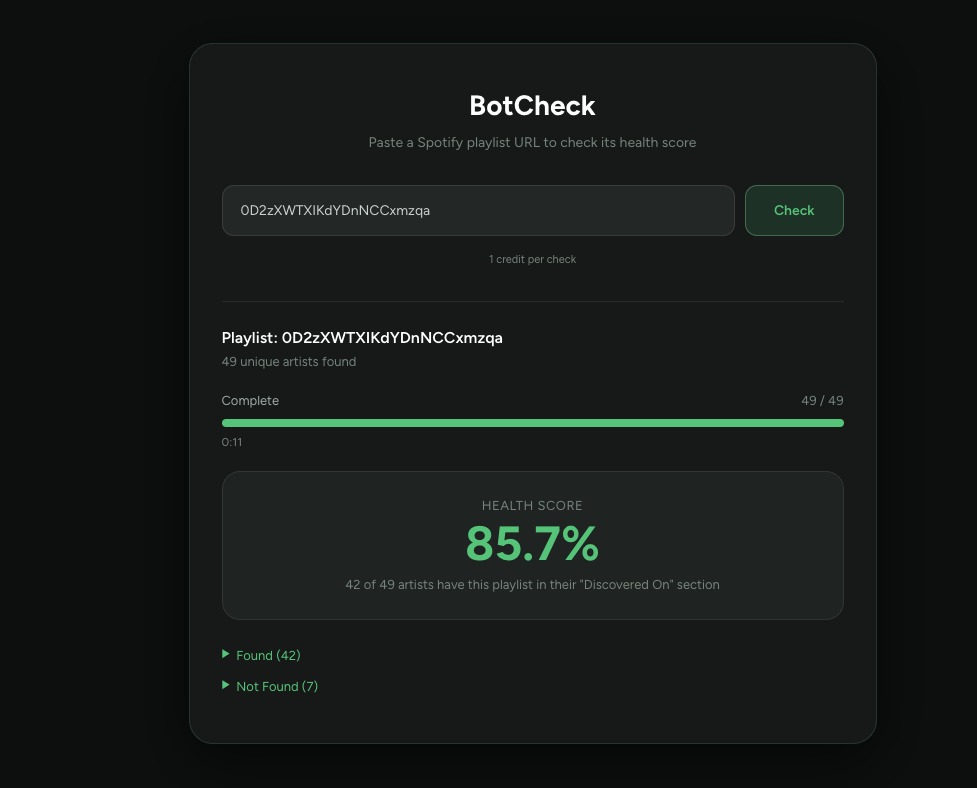
The PlaylistVet one-click playlist quality check runs a cross-referencing process between a given playlist and the “Discovered On” playlists showcased on an artist’s profile.
How the PlaylistVet score works
PlaylistVet gives you a playlist quality rating score, which will be a quality percentage indicating how genuine a playlist is based on the amount of Spotify artist profiles that playlist appears on. This will let you determine a quality playlist’s traffic and legitimacy. This score indicates how many of the artists have that playlist appearing on their “Discovered On” which is determined by high traffic playlists and algorithmic playlists.
This enables Playlist Supply users to identify playlists that show real algorithmic traffic, with genuine listeners and prominent visibility on the front page of Spotify featured artist profiles. Now, you can avoid wasting time pitching to bad playlists or fake playlists riddled with fake traffic using the playlist quality-checking tool.
Every playlist indexed by Playlist Supply has its own health check option that you can click to automatically analyse the playlist’s quality. Good playlists with a higher playlist quality score also have a tendency to be algorithmically favored in the Spotify algorithm.
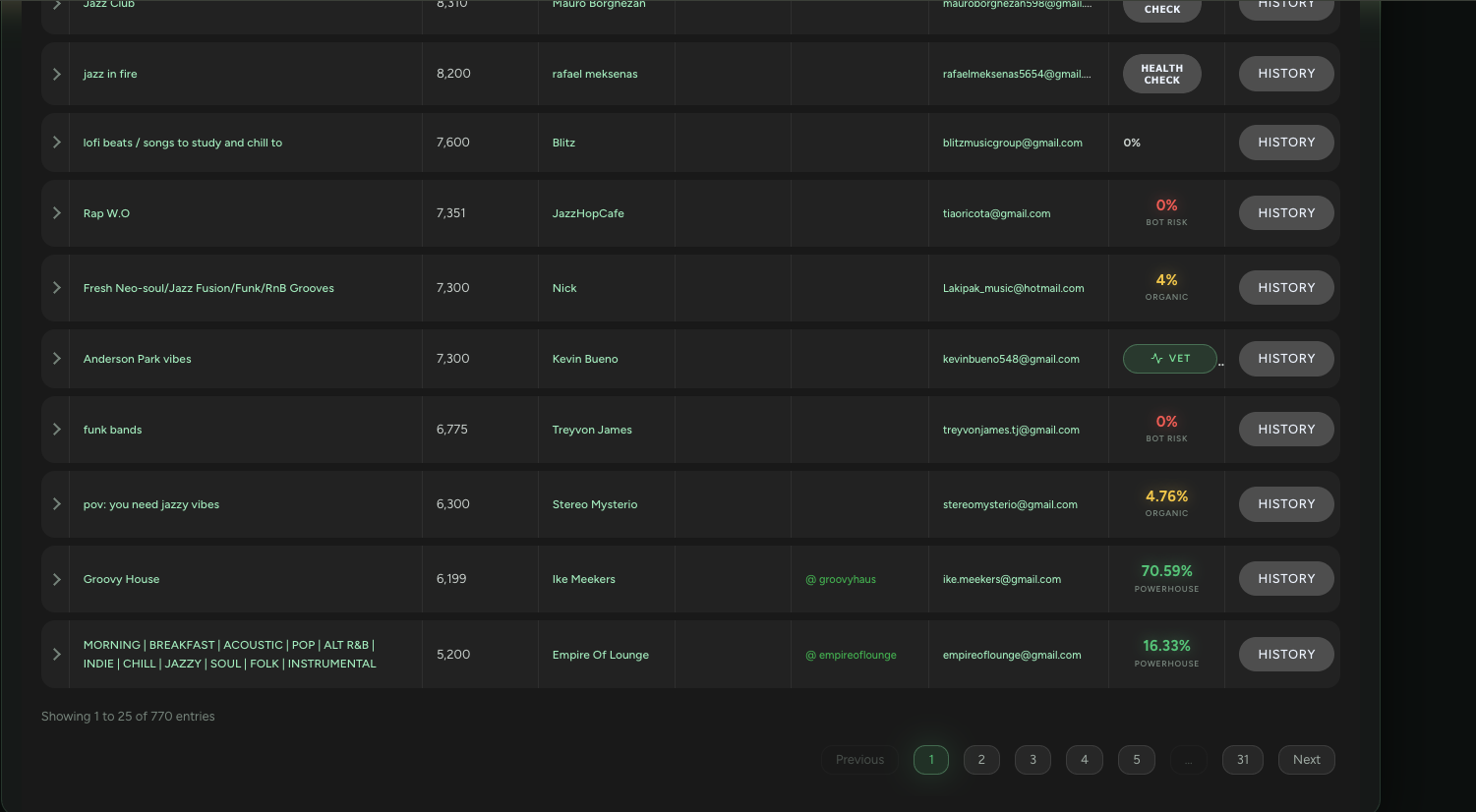
What PlaylistVet checks
Enhanced Playlist Vetting: The Playlist Vet feature represents a significant advancement in playlist vetting capabilities, enabling users to conduct thorough in-depth playlist background checks on any playlist they come across.
Cross-Referencing with Artist Profiles: The PlaylistVet feature intelligently cross-references the playlist under scrutiny with the “Discovered On” playlists found on an artist’s profile. This meticulous process ensures that the playlists identified through PlaylistVet are associated with genuine artists and have received recognition from prominent musicians. Good playlists are prioritised on Spotify artists’ profiles and often lead to new playlist listenership.
AI-Powered Validation: The check reads Spotify data that cannot be bought: a playlist only appears in an artist's Discovered On section when it sends that artist real streams. That is what makes the score a reliable read on legitimacy where a follower count is not.
Increased Legitimacy: Users can trust that the playlists identified through the Spotify playlist quality analyzer are legitimate, as they are organically associated with featured artists and have achieved visibility on the front page of artist profiles. This significantly reduces the risk of encountering fraudulent or artificially inflated playlists.
Seamless User Experience: With the PlaylistVet feature, users can seamlessly integrate playlist validation into their playlist placement discovery and music marketing campaign. By making informed decisions about the playlists they engage with, users can enhance their placement experience and discover high-quality music tailored to their preferences.
Industry Impact: The introduction of the PlaylistVet feature can transform the music industry’s playlist marketing landscape. It gives musicians and industry professionals a chance to navigate the vast ocean of playlists with confidence and target playlists that have already been vetted.
How to tell if a Spotify playlist is good: 4 quick checks
- Check the PlaylistVet score. It shows what share of the playlist’s artists list the playlist in their Spotify Discovered On. That is data a curator cannot buy.
- Look at the follower history. Steady growth is normal. Sudden vertical jumps or drops often mean bought followers. Our guide on how to track Spotify playlist follower stats shows how to read the chart.
- Check the fit. Play the newest tracks on the playlist. If the genre, mood and energy are close to your song, the playlist’s listeners are more likely to stream and save it.
- Check that the curator is active. A playlist that still adds songs every week or month is worth a pitch. One that has not changed in a year rarely is.
The fastest way to find playlists that pass these checks is to start from artists who sound like you. PlaylistSupply’s Similar Artist Search reads the Discovered On sections of similar artists, so the playlists it returns are already sending those artists real listeners. You can also browse the free Playlist Directory of Spotify curators by genre.
Check a playlist for free before you pitch
Paste any Spotify playlist into the playlist checker to start, and PlaylistVet returns its quality score inside the app. Follower counts can be bought. Discovered On cannot, so a playlist with big numbers and a low score is the classic sign of a botted playlist, and a playlist with a high score is one worth your pitch.
Since the inception of PlaylistSupply, the first Spotify playlist search engine, we have sought to empower artists, managers, and record labels to tackle playlist marketing in the most efficient way possible. Our Spotify playlist quality vetting tool PlaylistVet is more than just a feature; it’s a revolution in the world determining “Is it a good playlist?”. Now you can target a playlist with more data on your side.
Ready to find playlists to vet? Start a free trial to find playlists and experience the PlaylistSupply app firsthand. Free. No card needed. Then compare plans on the pricing page when you are ready to vet and pitch at scale.